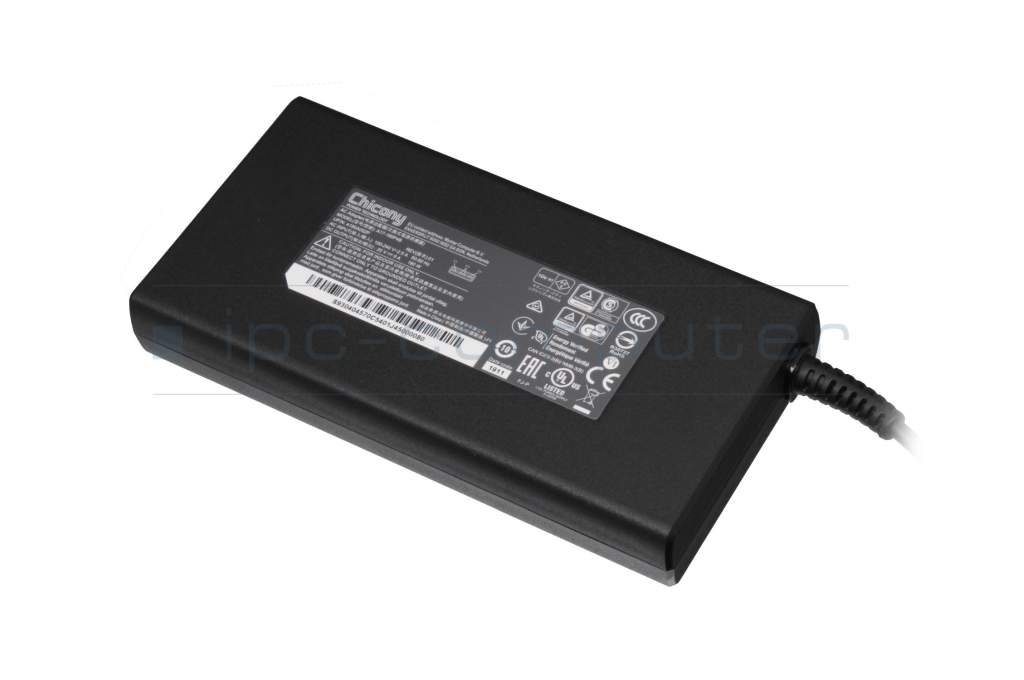
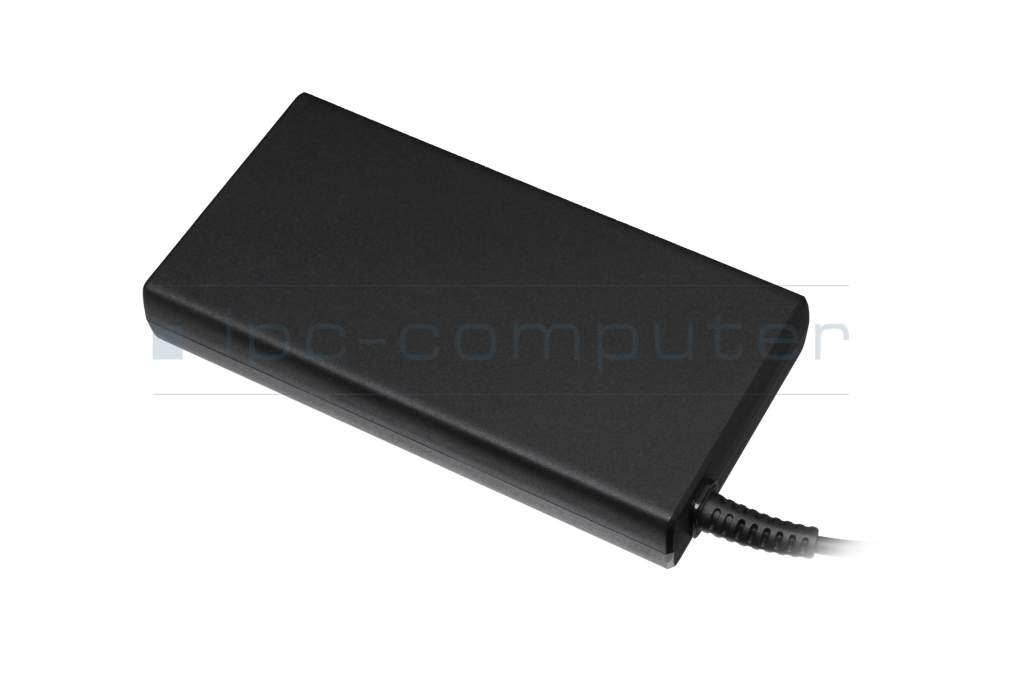
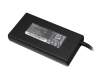
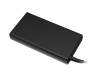
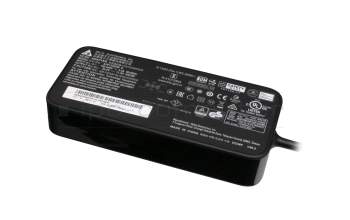
S93-0404560-D04 original MSI AC-adapter 180.0 Watt

Kurzbeschreibung
- 20.0 Volt
- 9.0 Ampere
- 180.0 Watt
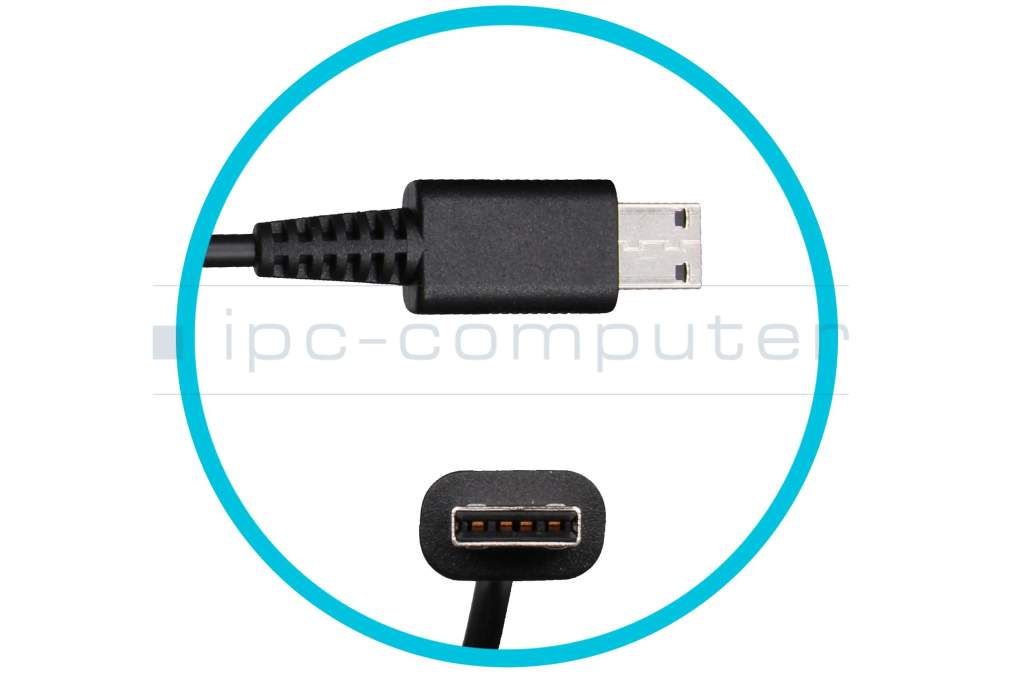
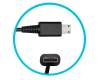
- Connector diameter outer / inner 12.0 mm / 0.7 mm
plus shipping charges
- Standardlieferung 29. September - 29. September
- Expresslieferung 29. September
- bei Bestellung innerhalb 18 hrs 45 min




S93-0409350-C54 original MSI AC-adapter 230.0 Watt normal
plus shipping charges
Product Info
- Manufacturer
- MSI
- Item Number
- S93-0404560-D04
- Primary Partnummer
- S93-0404560-D04
- Safety information
- Sicherheits- & Herstellerkontakt-Informationen
Common data
- Condition
- New
- Manufacturer
- Original directly from MSI
- Intended use
- Laptops
- Color
- black
- Delivery includes
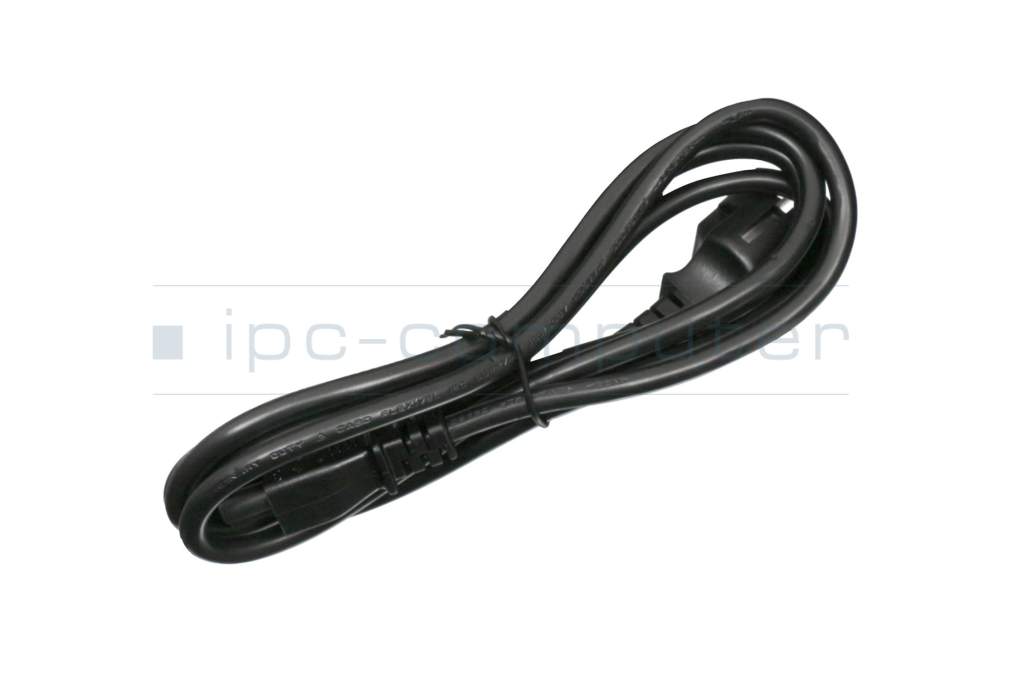
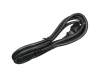
- incl. power cable (3-pole cable C5)
Technical Data
- Tension (volt)
- 20.0 Volt
- Amperage (ampere)
- 9.0 Ampere
- Output (watt)
- 180.0 Watt
- Input (volt)
- 100-240V / 50-60Hz
- Energy efficiency
- VI
Laptop Plug
- Connector type / shape
- angled / 180° straight
- Connector length (mm)
- 12.0 mm
- Connector diameter outer / inner
- 12.0 mm / 0.7 mm
- Length of the connector cable (m) (ca.)
- 1.75 m
Weight & Meassurements
- Length / Width / Hight
- 145 mm / 73 mm / 24 mm
More Information
- Overload-, short-circuit- and overheat-protected
- yes
- Seal of approval
-
CCC
CE
PSE
Technical Inspection Association (TÜV)
TÜV Argentina Certificado
UL Listed
Suitable for these MSI series models:
Creator Z16 B12UHT (MS-15G1)
Creator Z16P B12UGST (MS-15G1)
Creator Z16P B12UHST (MS-15G1)
Creator Z17 A12UE (MS-17N1)
Creator Z17 A12UET (MS-17N1)
Creator Z17 A12UGST (MS-17N1)
Creator Z17 A12UGT (MS-17N1)
Creator Z17 A12UHST (MS-17N1)
Creator Z17 A12UHT (MS-17N1)
CreatorPro Z16 B12UKST (MS-15G1)
CreatorPro Z16P B12UKST (MS-15G1)
CreatorPro Z16P B12UMST (MS-15G1)
CreatorPro Z17 A12UKST (MS-17N1)
CreatorPro Z17 A12UMST (MS-17N1)
Dragonshield GE66 11UE (MS-1543)
Dragonshield GE66 11UG (MS-1543)
Raider GE66 11UE (MS-1543)
Raider GE66 11UE (MS-17K3)
Leopard GP66 11UE (MS-1543)
Leopard GP76 11UE (MS-17K3)
Pilot GP76 12UE (MS-17K4)
Raider GE66 12UE (MS-1544)
Raider GE76 12UE (MS-17K4)
Stealth GS77 12UGS (MS-17P1)
Stealth GS77 12UHS (MS-17P1)
Vector GP66 12UE (MS-1544)
Vector GP66 12UEO (MS-1544)
Vector GP76 12UE (MS-17K4)
Vector GP76 12UEO (MS-17K4)
WE76 11UK (MS-17K3)
Category
- Category
- AC-Adaptor
- Usage
- Laptop
- Excerpt of suitable models for P/N S93-0404560-D04
- MSI GE66 Raider 10SE/10SGS/10SD (MS-1541) , MSI GE66 10SE/10SGS/10SD (MS-1541)
You've found this article over a part number. We'll check if it's the correct sparepart for your machine. To do this, please insert the manufacturer and the name of the model in the order comment.
Videos & Contributions
Important and useful informations about laptop AC adapters
Frequently asked questions about AC adapters
All questions about AC adapters
AC adapters FAQ